I´m reloading, cover me
You are not alone

Why calling for cover is the most disciplined thing you can do
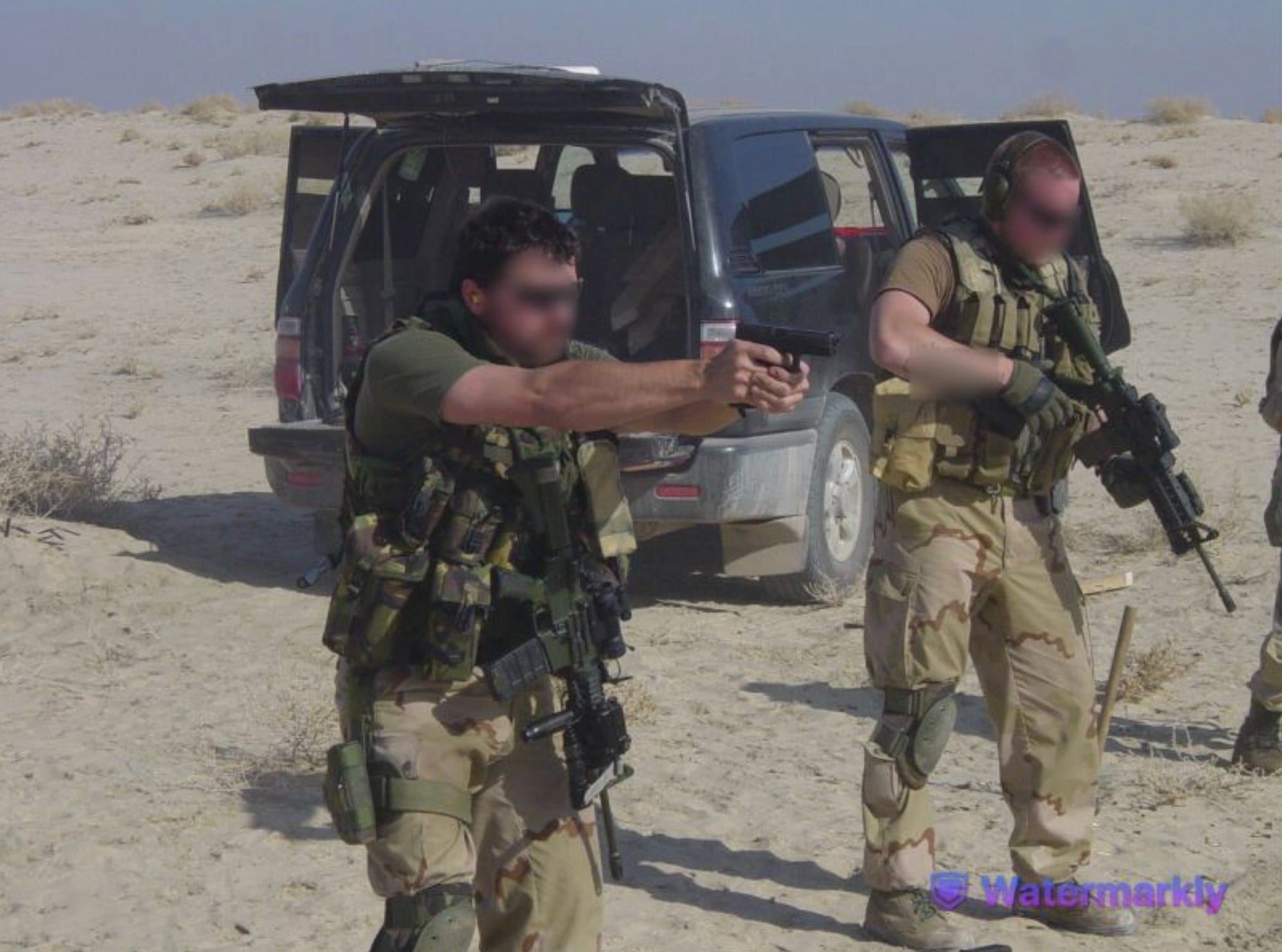
In Special Forces contact drills, there is a moment every soldier trains for obsessively.
Your weapon goes dry. Magazine empty. You are combat ineffective. Not wounded. Not down. Just empty. Five seconds from being back in the fight, if you handle it right.
What you do in that moment is not instinctive. It is trained. Because the untrained instinct is to hide it. To keep moving, keep the expression neutral, keep performing competence while quietly scrambling to fix the problem alone.
In training, that instinct gets hammered out of you.
What you do instead is shout one word at the top of your lungs:
RELOADING.
Your team hears it. They shift fire. They cover your sector. You change the magazine, chamber a round, and you’re back. Five seconds of vulnerability, openly declared, handled cleanly. The drill continues. The unit survives.
Simple. Brutal. Effective.
And almost entirely absent from civilian life.
You´re running the business, take the hits....and think you need to do it all yourself....all the time...
You are strong, grit your teeth, suffer in silence.
Not seeing everybody around you suffers with you.
What the Stoics Understood About Asking for Help
Marcus Aurelius, Roman Emperor, commander of armies, and one of the most battle-tested Stoic philosophers in history, wrote something in his private journals that tends to surprise people who assume Stoicism is about silent self-sufficiency.
“Don’t be ashamed to need help. You have a duty to fulfill, and if you’ve been wounded, you need a comrade to pull you up.”
This is not the Stoicism most people have been sold. The popular version is gritted teeth and cold showers and performing invulnerability so convincingly that no one can tell how much it costs. But that is not what Marcus Aurelius practiced and it is not what he wrote.
He understood what the military has always understood: the unit is the organism.
The individual’s effectiveness is the unit’s effectiveness.
Hiding a wound doesn’t protect the mission, it compromises it.
Aristotle made the philosophical foundation for this explicit two centuries before Marcus Aurelius picked up his pen. In his Politics, he wrote that man is by nature a social animal, and he didn’t mean this sentimentally. He meant it structurally. Human beings are not designed to operate alone.
The capacity for language, for communication, for coordinated action, these are not conveniences layered on top of an otherwise solitary creature. They are the architecture. We are built for interdependence, and when we pretend otherwise, we are working against our own design.
The performance of invulnerability is itself a form of weakness, because it cuts you off from the only thing that can restore you.
You are not alone.
What We Do Instead
In civilian life, running out of ammo gets treated like a character flaw.
So you don’t say it.
You work through the burnout. You smile through the dinner. You tell your spouse, your team, your clients that everything is fine, and you say it convincingly enough that they believe you, which means the people who would have covered your sector if you’d asked never get the chance.
This is not strength. It is a very expensive impersonation of strength.
And the cost is not only paid by you.
When you go down, and eventually you go down, the people around you pay it too. Because you didn’t give them the information they needed to support you while there was still time to do it cleanly.
The Practice
This is a skill. Like any skill, it requires practice before it becomes available under pressure.
Start small. Just the immediate reality, stated plainly, to one person who has earned that information.
“I am reloading. I need thirty minutes. Cover me.”
To your spouse, before you disappear into numbness at the dinner table.
To your business partner, before the decision-making quality degrades and everyone pretends not to notice.
To your team, before the energy they’re drawing from you runs dry and they feel it without knowing why.
Name it. Specifically. With a time frame attached, because ‘I’m struggling’ is open-ended and frightening. ‘I need thirty minutes and then I’ll be back’ is a tactical handoff. It gives the people who care about you something concrete to work with.
Then take thirty minutes. Without guilt. They are yours.
Guilt is the enemy here. You cannot reload with one hand if the other hand is still trying to hold the weapon up.
Ask Before the Magazine Runs Out
The highest-level version of this is not reactive. It is not about learning to call reloading only after you’ve hit empty. It is about developing the self-awareness to recognise the warning signs and communicate before the weapon goes dry.
The Sunday Summit is built on exactly this principle. One hour, once a week. Not planning. Not optimising. Honestly assessing. Where am I actually? What do I actually have? What needs to happen before I can show up fully for another week?
The soldiers who last in sustained operations are the ones who are honest about their state and ruthless about their recovery. That discipline is available to you. It just requires trading the performance of invulnerability for something more honest, and ultimately, much more durable.
One Honest Question
When was the last time you actually called reloading?
Naming your state. Asking for cover. Taking the time you need without apology.
If you can’t remember, that’s the answer.
The people around you are not waiting for you to be invincible. They are waiting for you to be real.
Give them something to work with.